01 · Step into the role.
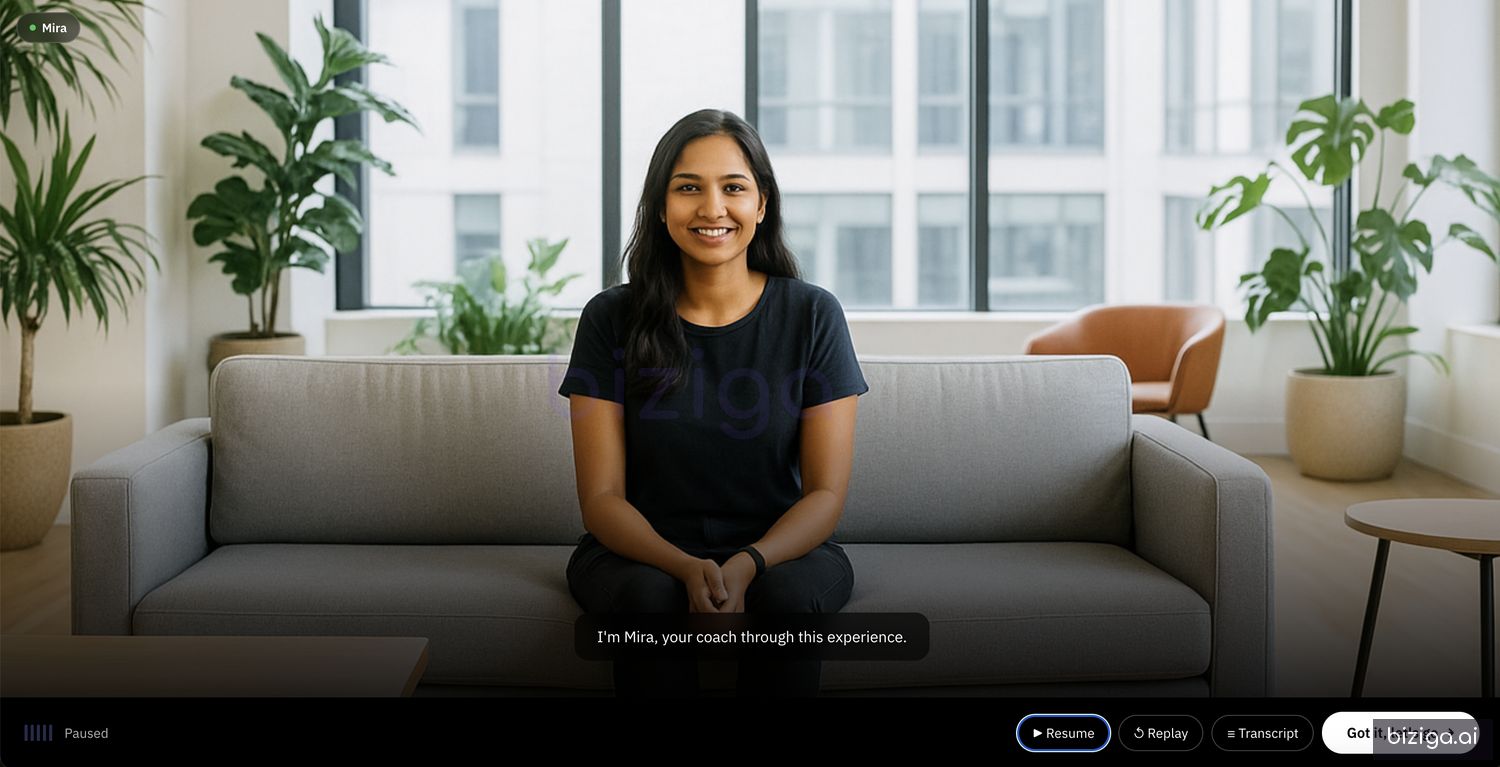
A real role, a mission, a deadline. Mira briefs you in — the situation, the stakeholders, what's at stake — and stays in the room from the first minute.
Here is exactly what happens when someone runs a Biziga simulation, from the moment they step in to the report your organisation receives.
A real role, a mission, a deadline. Mira briefs you in — the situation, the stakeholders, what's at stake — and stays in the room from the first minute.
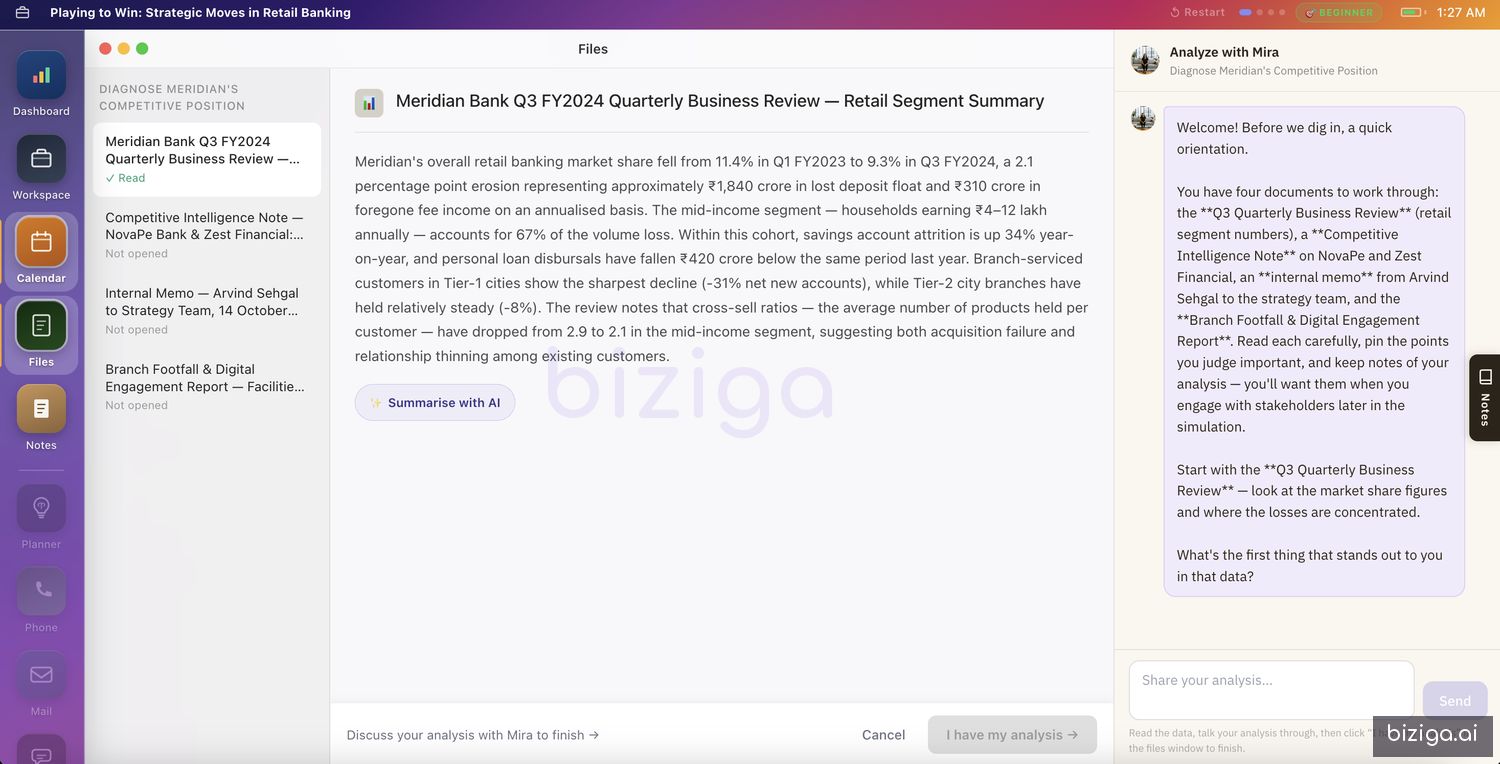
Not a chat window — the job. Files to read and judge. An inbox that needs triage. A calendar, a planner, and the work between the work: what to prioritise, when to act, when to escalate. Every choice has consequences that ripple through the scenario.
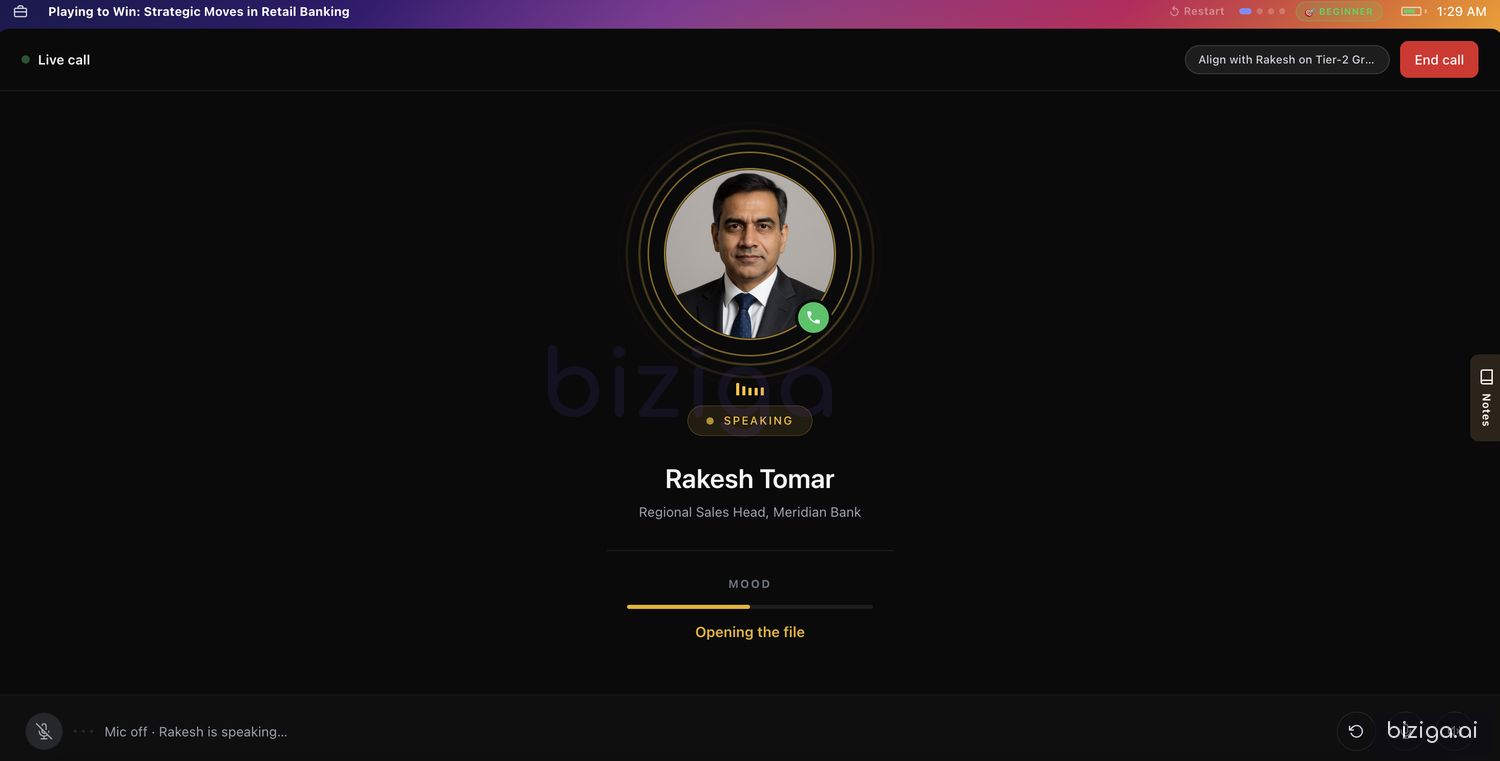
Voice conversations with stakeholders who have agendas, moods, and memories. They push back. They remember what you said an hour ago.
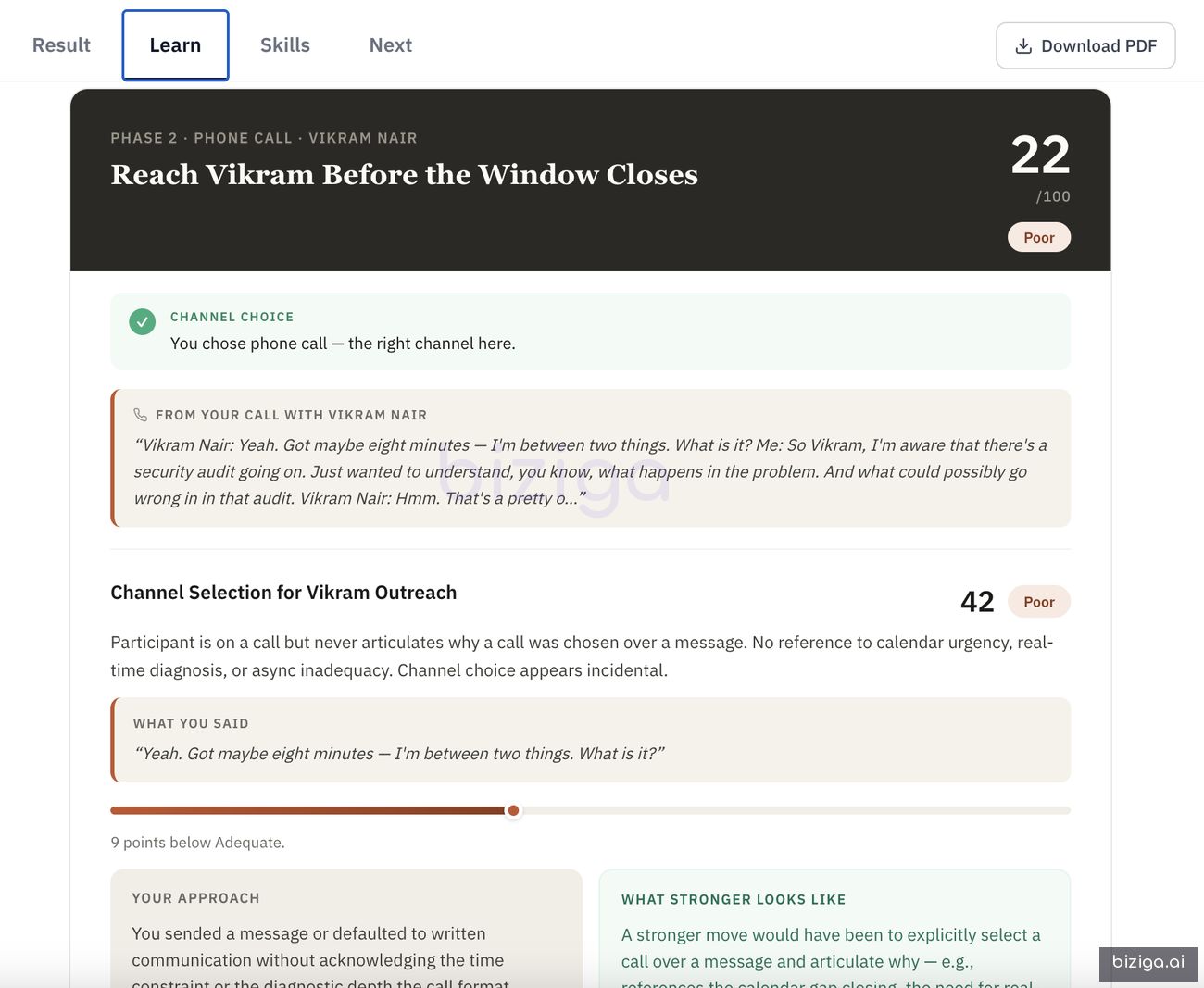
Every run ends with Mira walking you through what actually happened, quoting your own words and choices as evidence, with one thing to carry forward. Feedback is information; coaching is transformation.
The hardest part of any assessment is being believed. A score is easy to dismiss — "the AI got it wrong." Biziga's debrief is built so it can't be waved away.
Every observation points back to a specific moment: the email they sent, the thing they said on the call, the priority they let slip. Not "you scored low on judgment" — but "here is the moment your judgment cost you, and here is what it cost."
When the evidence is the learner's own work, there's nothing to deny. There's only what to do better.
Per-skill scores anchored to behaviour. Stakeholder movement, mission outcomes, growth over time. For organisations: cohort heatmaps that double as training-needs analysis, and reports any manager, dean, or board member can audit.
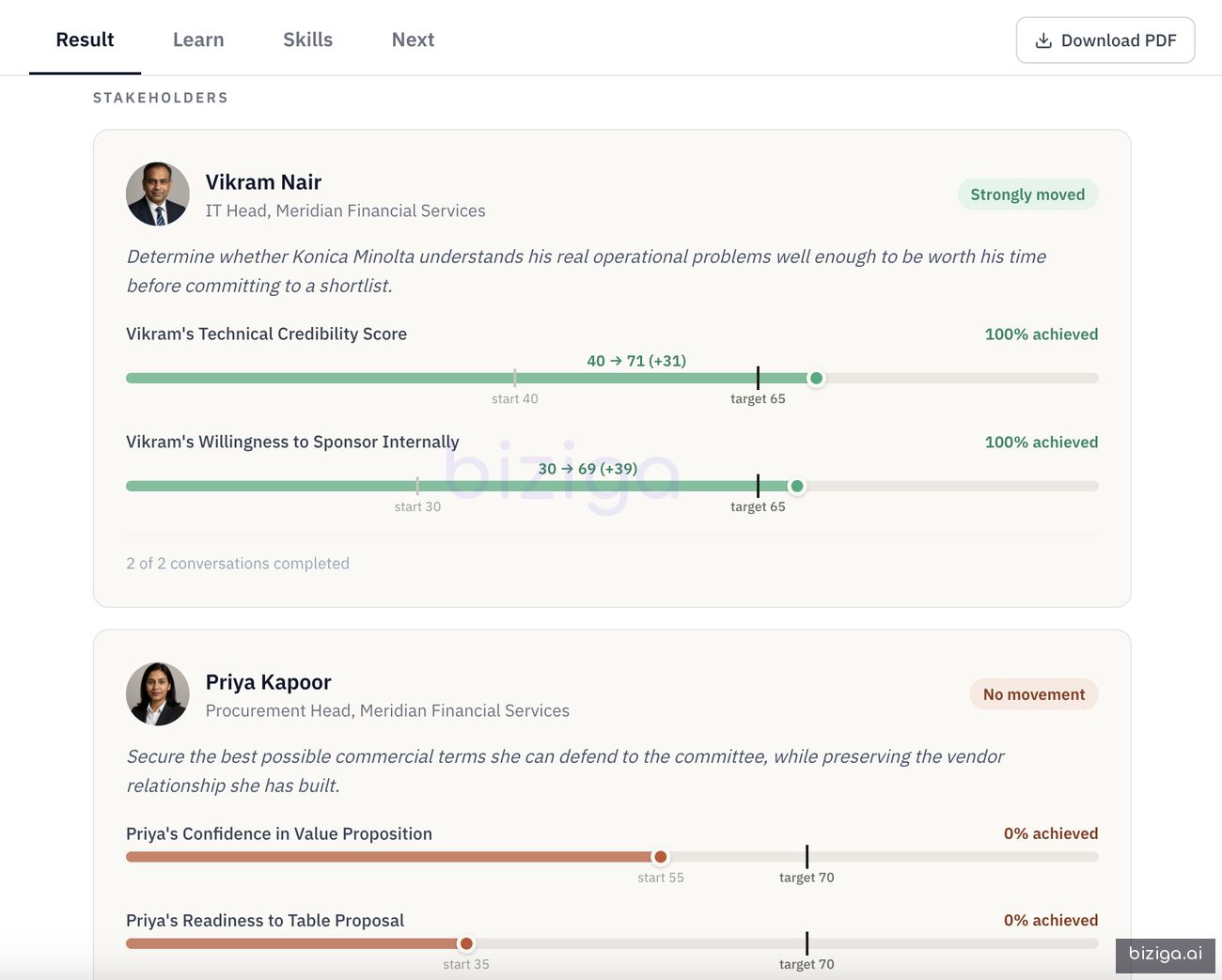
Every score comes from a defined standard — a 43-skill taxonomy, behaviourally anchored the way assessment centres score, applied identically to everyone. The AI applies the standard; it never invents it.
Biziga is the Capability Platform — new to the term? What is a Capability Platform? →
We'll walk you through a live simulation in a demo — no deck required.